Fishoal, Web and Mobile Q&A Social Platform
Read time:
10 min
Client:
Infinomial Technology
Industry:
Social Media - Community App
Start:
End:
Duration:
20 weeks
Project Overview
Fishoal is a web and mobile Q&A social platform designed to help users discover questions, share answers, and join topic-based conversations. The product combines a structured Q&A feed with category filters, reputation badges, user scores, swipe-based topic discovery, and chatrooms.
The goal was to create a more focused alternative to noisy social media feeds by helping users find relevant discussions, evaluate contributors, and participate in communities around topics they care about.
My Role
I worked across the product design process, including user flows, wireframes, interaction design, high-fidelity UI, and responsive web/mobile design. I helped shape the platform’s core social experience, including content discovery, question browsing, user profiles, badges, chatrooms, and mobile interactions.
Platform
iOS/Android Mobile App and Web platforms

The Challenge &
My Approach
The Challenge
During the pandemic, people were spending more time online to stay connected, learn, ask questions, and join conversations. However, many social platforms felt noisy, repetitive, and difficult to navigate. Users could scroll endlessly, but it was not always easy to find meaningful discussions, trustworthy answers, or communities built around specific interests.
At the same time, people were looking for more interactive and engaging ways to share knowledge beyond traditional forums or static Q&A websites. The opportunity was to design a platform that could make online discussion feel more focused, credible, and participatory, while still keeping the experience social and enjoyable.
The challenge was to create a digital space where users could discover relevant topics, ask and answer questions, learn from others, and feel motivated to participate in a more intentional community experience.
My Approach
I followed a human-centered design process to understand how people were using social platforms, what made online conversations feel valuable, and where existing experiences created frustration. I looked at user behaviours around browsing, asking questions, joining discussions, sharing opinions, and building trust with other contributors.
From there, I focused on designing a more engaging and educational social experience, one that encouraged users to participate around topics they care about, not just passively consume content. My approach was to balance familiar social media patterns with clearer structure, stronger discovery, and trust-building elements so the platform could feel both useful and enjoyable.
Research & Key Insights
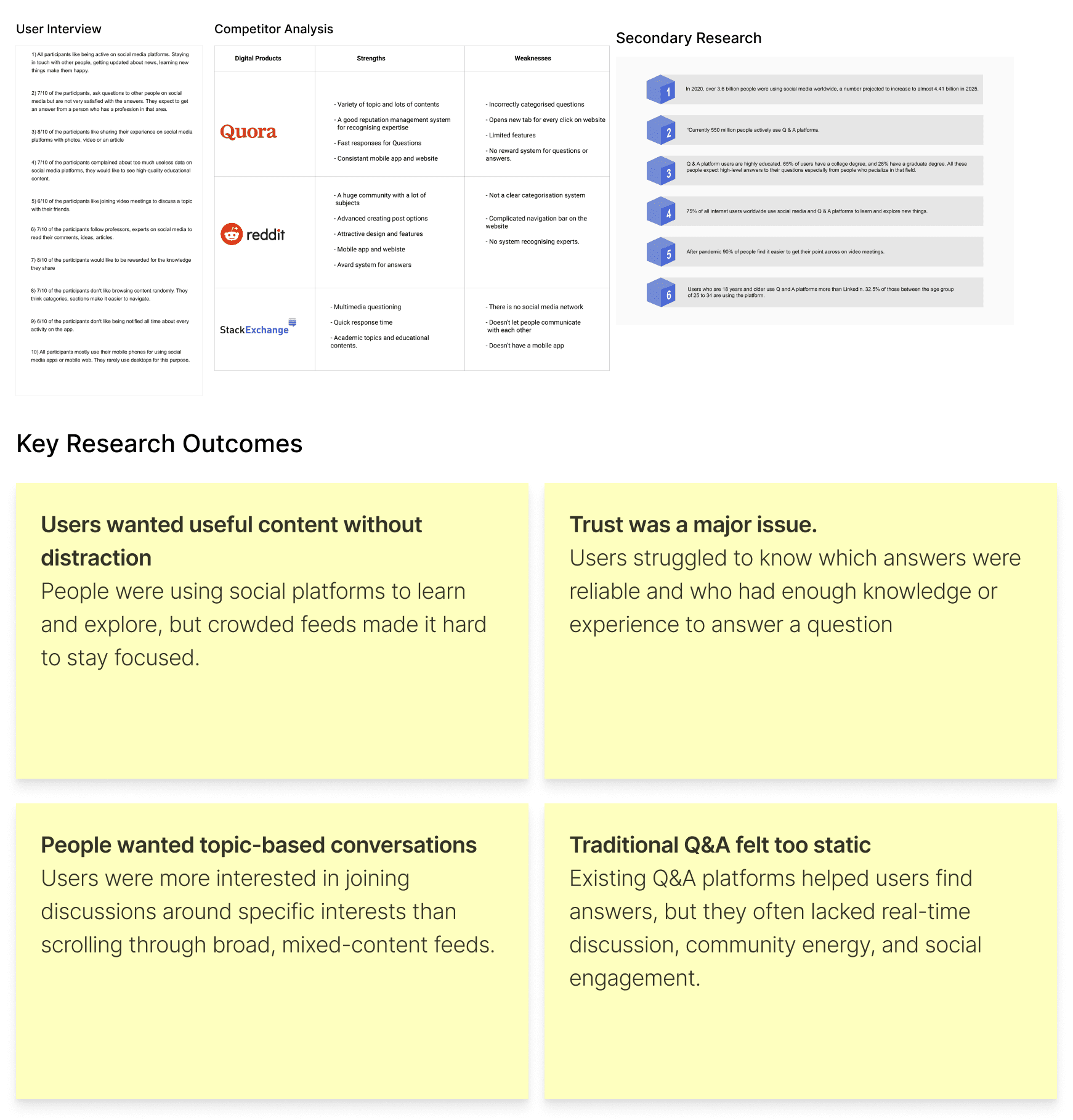
To understand how people used social and Q&A platforms, I conducted user interviews, secondary research, and competitive review. The goal was to identify why existing platforms felt noisy, what made answers feel trustworthy, and what would motivate users to participate in a more focused learning community.
Research Synthesis
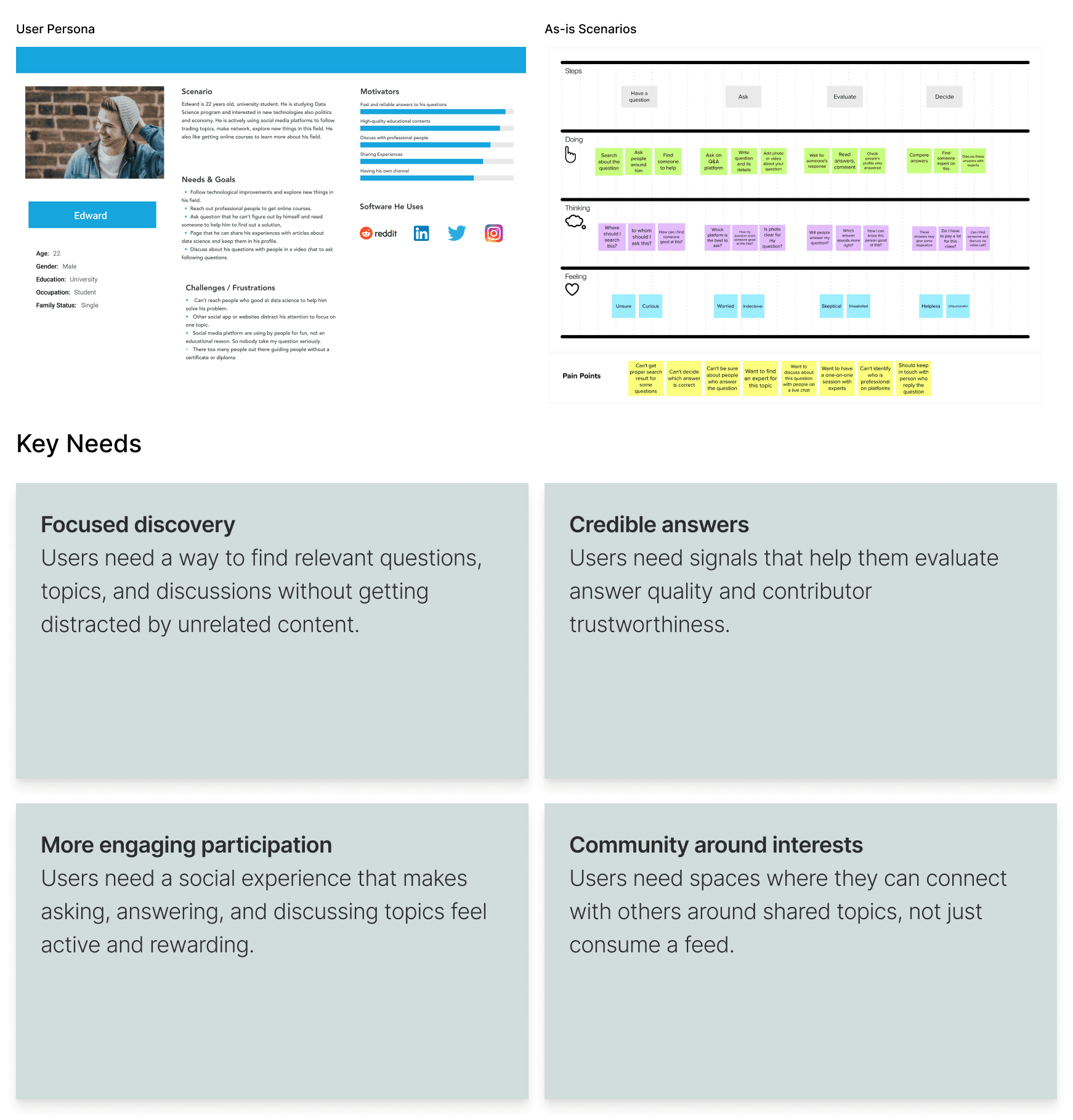
After gathering research insights, I synthesized the findings into a persona, as-is scenario map, and needs statements. These artifacts helped define the target user, map the current question-asking journey, and translate pain points into clear product needs.
Strategy & Design Process
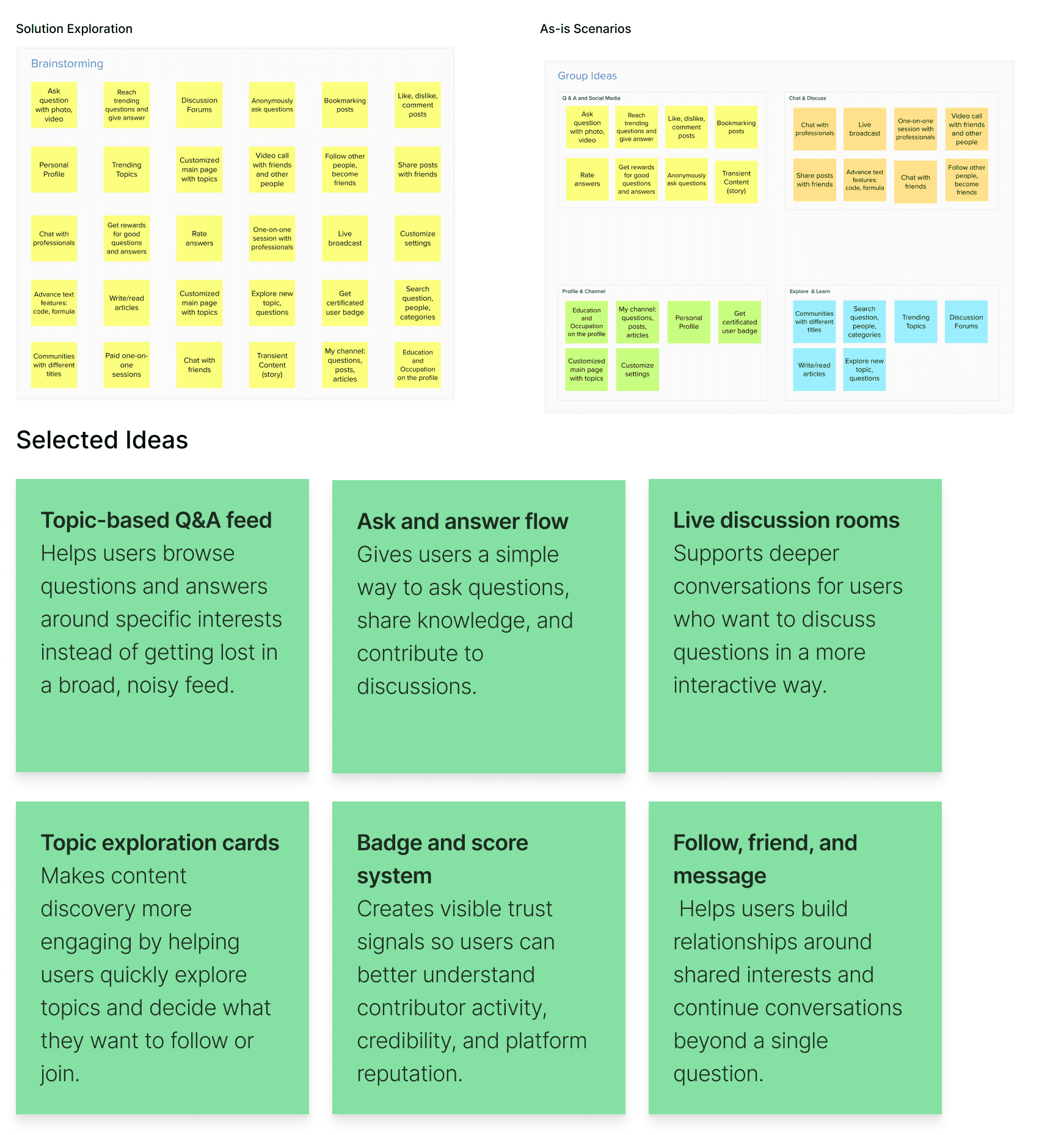
After defining the core user needs, we explored different ways to make the platform more focused, trustworthy, and engaging. As a team, we brainstormed potential features, grouped related ideas, and prioritized the concepts that best addressed the user pain points identified during research.
The goal was to move beyond a standard Q&A feed and design a social learning experience that could support discovery, credibility, participation, and real-time discussion.
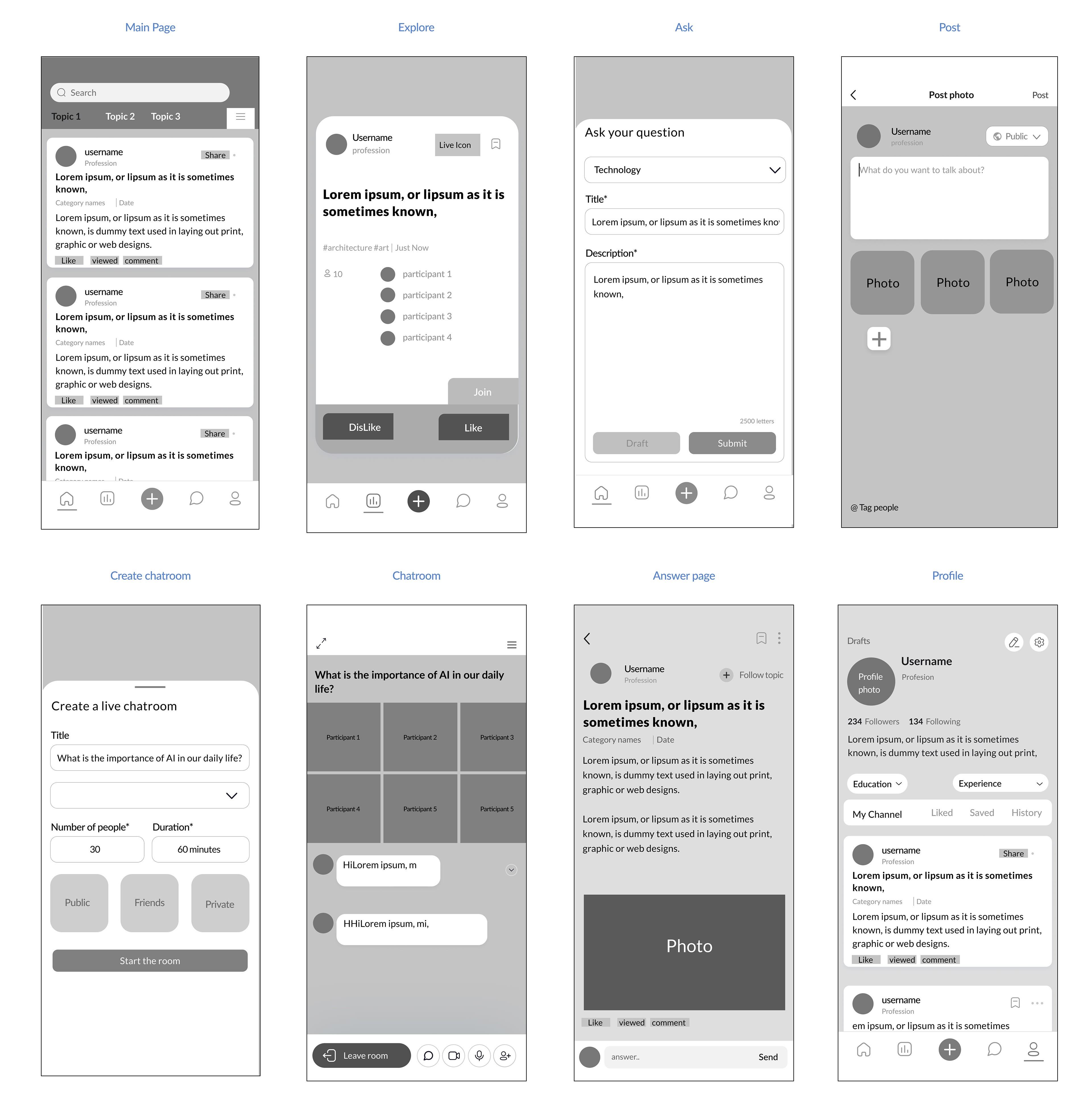
Low Fidelity Wireframes
Once we sketched the possible solutions on paper and discuss on them with my team, we decided on the final concept, then we moved to the next step and created low-fidelity wireframes.
Mobile App
Desktop Website

Final Solution